Frequently Asked Questions
The most-asked questions about provinces of iran.
What exactly are the provinces of Iran?
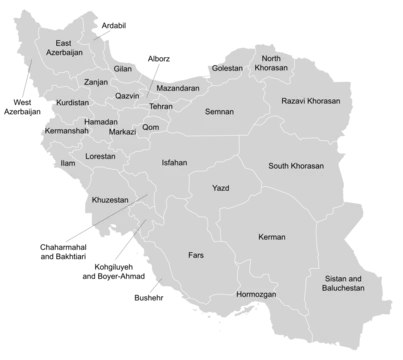
Iran's provinces (ostans) are the country's first-level administrative divisions, each governed by a provincial government headquartered in a designated capital city. They serve as the primary framework for local governance, resource management, and public services across the nation.
How many provinces does Iran have?
Iran is divided into 31 provinces. This number has shifted over the decades as some regions were split or reorganized, but 31 reflects the current administrative count.
What is the capital city of a province called?
Each province has a designated provincial capital (markaz) that houses the governor's office and key administrative bodies. For instance, Isfahan city serves as the capital of Isfahan Province, while Tehran city anchors Tehran Province and also functions as the national capital.
Which is the largest province by area?
Kerman Province is the largest, covering roughly 181,000 square kilometers of arid, mountainous terrain in Iran's southeast. Its vast expanse makes it a significant region for pastoral culture and mineral extraction.
Which is the smallest province?
Tehran Province is the smallest in land area, encompassing just over 7,000 square kilometers. Despite its compact size, it holds the greatest share of the national population because of the Tehran megacity.
How are provinces governed?
Each province is led by a governor (ostandār) appointed by the central government, who oversees local administration and implementation of national policies. Beneath the governor, an elected provincial council handles legislative and budgetary matters at the regional level.
Where should a newcomer start learning about Iran's provinces?
A practical starting point is Tehran Province for political and economic context, followed by Fars and Khorasan provinces for their deep historical and cultural weight. Exploring the Caspian-coastal provinces and the southern desert regions afterward gives a well-rounded picture of the country's diversity.
What notable geographical features are tied to specific provinces?
Gilan and Mazandaran border the Caspian Sea and are known for lush subtropical forests, while Sistan and Baluchestan in the southeast contains the Dasht-e Lut, one of the hottest stretches of land on Earth. The Alborz and Zagros mountain ranges thread through multiple provinces, shaping climate and settlement patterns.
What is a notable historical moment connected to a specific province?
The 1979 political transformation was symbolically centered in Qom, within Tehran Province, where Khomeini's return drew massive crowds and set the revolution's course. The earlier constitutional movement of the early 1900s had strong roots in Tabriz, East Azerbaijan Province, where local merchants and clergy pushed for a national assembly.
What makes the provinces of Iran distinct from one another?
The 31 provinces span an enormous range of climates, languages, and cultural traditions, from the Persian-majority heartland to Turkic, Kurdish, Baloch, and Arab-speaking peripheries. Each province carries its own culinary customs, dialects, festivals, and economic base, making the country feel like a patchwork of distinct regional identities.