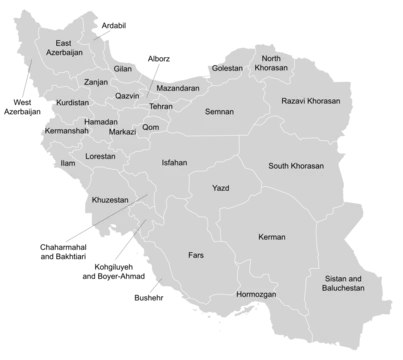
South Khorasan province
Sparsely populated Iranian province with a distinct historical identity.

South Khorasan province (Persian: استان خراسان جنوبی) is one of the 31 provinces of Iran, located in the eastern part of the country. Its capital is the city of Birjand. Created in 2004 from the division of the former Khorasan province, it corresponds largely to the historical region of Quhistan, which has a distinct culture, history, environment, and ecology. The province is the third-largest in Iran by area and the most sparsely populated, with a dry and desert climate.
- capital
- Birjand
- population_density
- about 5 inhabitants per square kilometer
- established
- 29 September 2004 (division of Khorasan province)
Lore & Background
South Khorasan province was created on 29 September 2004, when the Iranian parliament and Council of Guardians approved the division of Khorasan—the largest province of Iran—into three provinces: Razavi Khorasan, North Khorasan, and South Khorasan. Initially, South Khorasan included only Birjand County and a few new counties detached from it, such as Nehbandan, Darmian, and Sarbisheh. The region historically known as Quhistan encompassed the borders of present-day South Khorasan, with main cities such as Toon (now Ferdows) and Qaen. Birjand grew in importance during the Qajar dynasty. The area served as a refuge for Ismaili movements and for Arab refugees fleeing the Abbasid caliphate, and Zoroastrian vestiges remain. The province's climate is dry and desert, divided into hot-dry and mild-dry categories, with seasonal rivers and no permanent rivers. The northern and northwestern parts are mountainous and more fertile, while the southern and southwestern plains endure a harsh climate.
Reader's Guide
South Khorasan province matters as a distinct administrative and historical entity within Iran, representing the legacy of the ancient region of Quhistan. Its creation in 2004 marked a significant reorganization of Iran's largest province, reflecting local cultural and ecological differences. The province is notable for being the most sparsely populated in Iran, with only about 5 inhabitants per square kilometer, and for its dry desert climate. Economically, South Khorasan is known for its rugs, saffron, and barberry production. The province's population is predominantly Persian, and its higher education institutions include the University of Birjand and Birjand University of Medical Sciences. Understanding South Khorasan provides insight into Iran's regional diversity, the historical importance of Khorasan, and the modern administrative divisions that shape the country.
Did You Know?
- South Khorasan is the third-largest province in Iran by area, after Kerman and Sistan and Baluchestan.
- The province is the most sparsely populated in Iran, with about 5 inhabitants per square kilometer.
- South Khorasan corresponds largely to the historical region of Quhistan, which has a distinct culture, history, environment, and ecology.
- The province was created in 2004 when Khorasan, Iran's largest province, was divided into three provinces.
Frequently Asked Questions
What is South Khorasan province?
South Khorasan is one of Iran's 31 provinces situated in the country's eastern region. It largely corresponds to the historical area known as Quhistan, which carries its own distinct cultural and ecological identity.
What is the capital of South Khorasan province?
Birjand serves as the provincial capital. It is the main urban center in an otherwise vast, arid landscape.
Why is South Khorasan province considered distinctive among Iranian provinces?
Its dry, desert climate and extremely low population density set it apart from most other provinces. The region also preserves the legacy of Quhistan, giving it a historical and cultural character that differs from neighboring areas.
More in Provinces Of Iran 1-24
Elsewhere in the Provinces Of Iran universe
Spotted an error? Know more?
This is a living reference — every entry is fact-audited, and reader corrections feed straight into our audit queue. Suggest an edit · See this site's audit record